PET/CT Myocardial Perfusion

in Daytona Beach, FL

Diagnose symptoms such as chest pain, palpitations, or fatigue by monitoring both the electrical activity and blood circulation in your heart during exercise.


Cardiac testing can be nerve racking, but we are here to make it as straight forward as possible. No one plans on having heart problems, but if you do you need to find a doctor you can trust. At Complete Cardiology Care we staff Cardiologists and Electrophysiologists that perform texcercise stress test on patients in Daytona Beach, Ormond Beach, Palm Coast, Deltona, Deland, and the surrounding areas.

NST in daytona beach and titusville

Performed while laying down

NST in daytona beach and titusville

Trigger symptoms in a controlled setting

NST in daytona beach and titusville

Find out if you have blockages in both large or small vessels
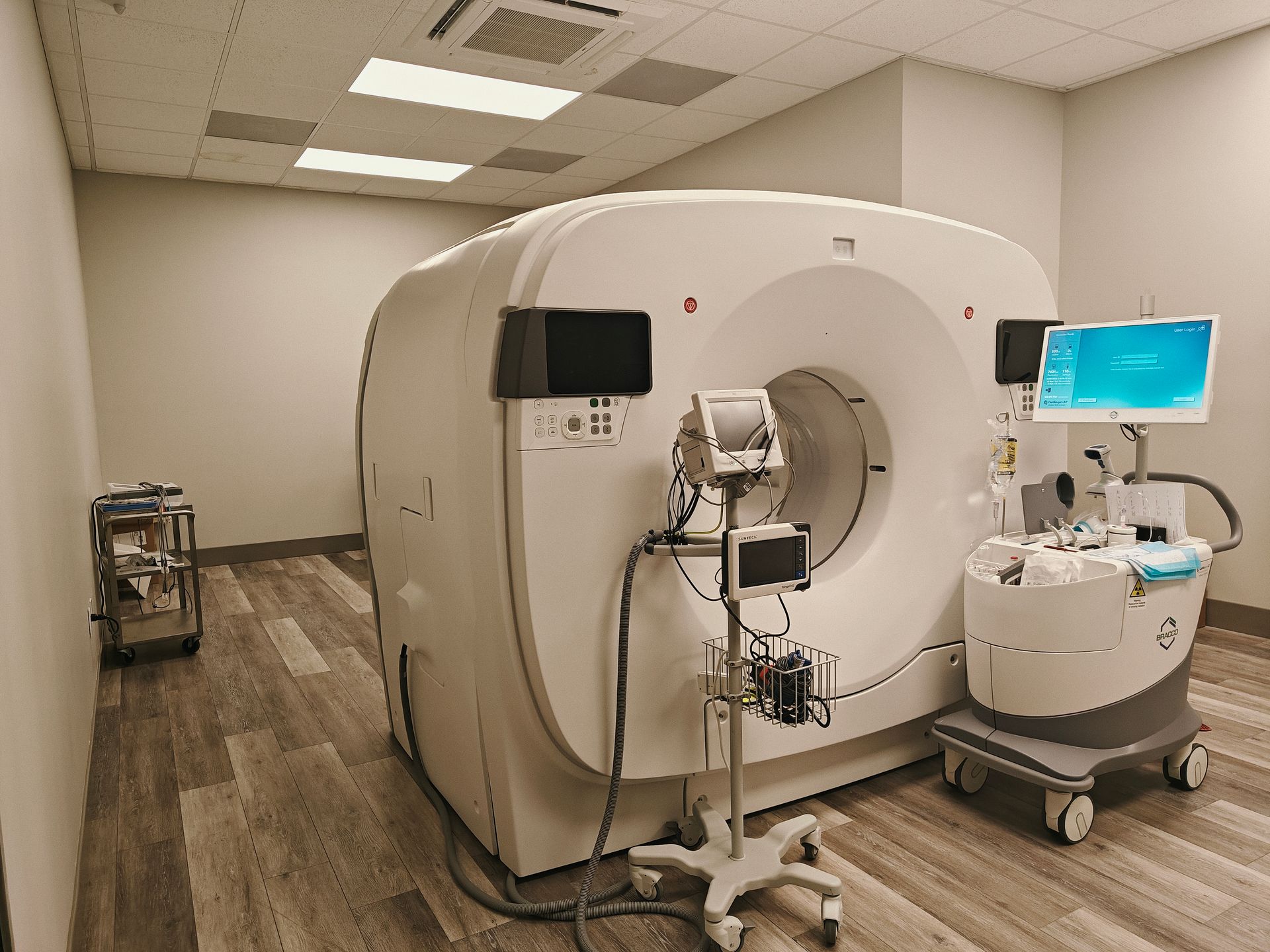
MaiCam 180 Dual Head Portable Cardiac Camera

What is a nuclear stress test?

A PET/CT myocardial perfusion stress test is an advanced heart imaging study that evaluates how well blood flows to your heart muscle at rest and under stress. It uses a small amount of radioactive tracer during a PET scan to create highly detailed images of blood flow and heart function, while a CT scan adds anatomical clarity and improves accuracy. The “stress” portion is usually done with medication rather than exercise, using drugs like regadenoson or adenosine to simulate the effect of physical exertion on the heart.


Doctors use this test to detect coronary artery disease, identify areas of poor blood flow, measure heart pumping function, and assess for previous heart damage. Compared to standard nuclear stress tests, PET/CT provides clearer images, more accurate results, and typically lower radiation exposure. The entire procedure usually takes 30–90 minutes and offers one of the most precise noninvasive evaluations of heart circulation available today.

  • Why do I need a PET/CT Myocardial Perfusion Test

    You may need this test if your doctor wants to evaluate how well blood flows to your heart muscle. It helps diagnose coronary artery disease (blocked/narrowed arteries), determine whether chest pain or shortness of breath is heart‑related, assess prior heart damage, or evaluate how well your heart pumps. This test is one of the most accurate noninvasive ways to look for poor circulation in the heart and often provides more precise results than a standard nuclear stress test.

  • What happens before a PET/CT Myocardial Perfusion Test?

    • You’ll receive instructions about fasting, usually for a few hours beforehand.
    • You may be asked to avoid caffeine, including coffee, tea, chocolate, and certain medications for 24 hours.
    • Your medical team will ask about medications, especially those for breathing problems, diabetes, or heart rhythm.
    • When you arrive, a staff member will place an IV line in your arm for the tracer and stress medication.
  • What happens during a PET/CT Myocardial Perfusion Test?

    • Resting images:
    • A small amount of PET tracer is injected through your IV to show blood flow to the heart at rest. You’ll lie still while the scanner takes images.

    • Stress portion:
    • A medication such as regadenoson or adenosine is given to simulate exercise by increasing blood flow in the heart. Most people feel mild sensations like warmth, chest pressure, or shortness of breath for a few minutes.

    • Stress images:
    • A second dose of tracer is given, and another set of PET images is taken while your heart is under “stress.”

    • CT scan:
    • A brief CT scan is performed to help align images and, in some cases, evaluate calcium in the coronary arteries.

    • The entire test usually takes 30–90 minutes.
  • What happens after a PET/CT Myocardial Perfusion Test?

    • Your IV is removed, and you can usually go home right away.
    • You may resume normal activities unless instructed otherwise.
    • Drink fluids to help clear the tracer from your system.
    • Your doctor will review the images and contact you with results, often within a few days.
  • What does the stress medication feel like?

    Most patients describe:


    A warm feeling

    Mild shortness of breath

    Flushing

    Light pressure in the chest

    These sensations typically last 1–3 minutes and go away quickly.

  • What else should I know?

    No electricity passes through your body during the test. There is no danger of getting an electrical shock.


    You will be able to drive afterwards


    During the test, tell your doctor if:

    • You have chest pain.
    • You are very short of breath.
    • You are lightheaded.
    • You have other symptoms.

Find out if that chest pain is heart related or something else

If you are curious about PET/CT Myocardial Perfusion Testing in Daytona Beach, FL please reach out to us. We are currently accepting new patients. Complete Cardiology Care staffs Cardiologists and Electrophysiologist that serve patients in Ormond Beach, Daytona Beach, New Smyrna Beach, Port Orange, Deltona, Deland, and the surround areas.


Our Cardiologists and Electrophysiologist take nearly all insurances. We accept Aetna, AARP Medicare Complete, Blue Cross / Blue Shield, Cigna, Florida Healthcare, Florida Hospital Care Advantage, Freedom Health, Health First Health, Humana PPO - out of network benefits apply, Medicare, Optimum Healthcare, Railroad Medicare, Tricare, United Healthcare, VHN, Wellcare.


​We are also a partner with the VA and are proud to serve those who have served our country!


Self Pay Cardiology services are available too! Call and ask for our price list.